
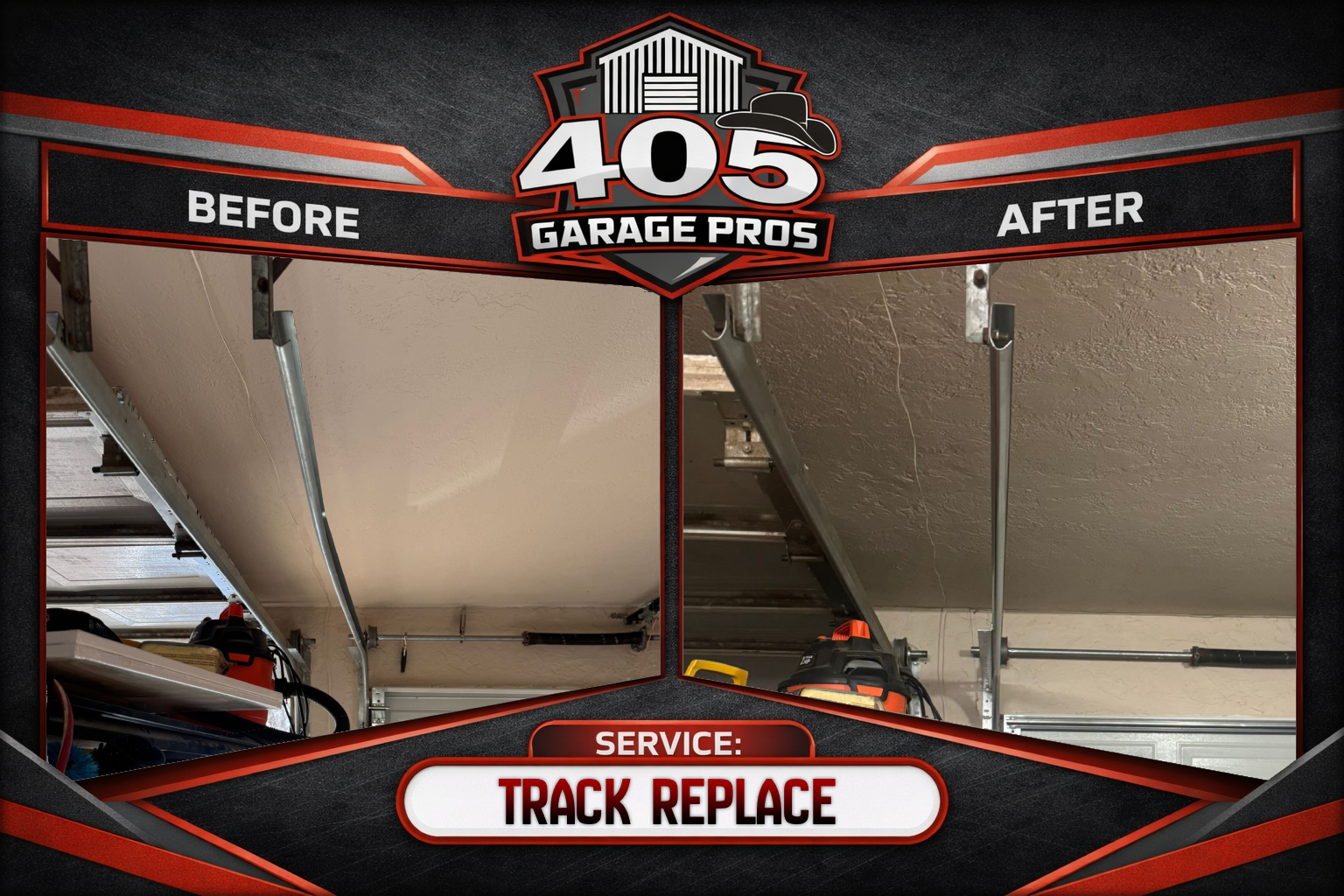
Tracks Are Thin Metal Doing A Heavy Job
It's easy to overlook the tracks. They're just the metal rails the door rides along, right up until they're bent, rusted, or pulled loose, and suddenly the whole door is grinding, shaking, or refusing to travel in a straight line. Tracks are made from relatively thin, formable metal, which is exactly what makes them easy to bend, and also exactly why a small impact can cause a bigger problem than it looks like at first.
405 Garage Pros replaces vertical and horizontal track sections on residential and commercial doors across Edmond, Norman, and Tulsa. Sometimes a section can be straightened or re-secured. Other times, especially with a sharp bend, split metal, or advanced rust, the track needs to come out and be replaced so the rollers have a true, even path to run on.
A door that's grinding, shaking side to side, or hanging at an angle is a sign the track has already been compromised. Continued use can pull rollers loose or cause the door to come off the track entirely.
What Causes Track Damage
- A vehicle, bike, or ladder bumping into the vertical track, even at low speed.
- Loose mounting brackets that let the track shift or pull away from the wall over time.
- Rust and corrosion working into the metal, especially in tracks exposed to moisture.
- Years of use gradually widening or narrowing the gap the rollers ride in.
- A door that's been running out of balance, putting uneven pressure on one side of the track.
- Debris buildup that forces rollers to fight the track instead of gliding through it.
Vertical Track vs. Horizontal Track
The vertical sections run up either side of the door opening and are the ones most exposed to accidental impact, since they sit right where a car bumper, bike handlebar, or garden tool can catch them. The horizontal sections run along the ceiling and guide the door as it curves into its open position overhead. Horizontal track damage is less common from impact but shows up more from age, rust, or a bracket that's worked loose from the ceiling structure.
Because the two sections do different jobs, damage in one doesn't always mean the other needs attention. A proper inspection checks both, along with the brackets holding them in place, before recommending what actually needs replacing.
Repair Or Straighten When
The bend is minor, the metal isn't split or cracked, and the mounting points are still solid.
Replace When
The track is sharply bent, rusted through, split, or the door has already come off track because of it.
Why Rust Matters More Than It Seems
A little surface rust on a track isn't usually urgent, but rust that's been left to spread weakens the metal over time and makes it more brittle. That matters because a horizontal track is helping carry the door's weight overhead. A track that fails structurally while the door is raised is a serious safety issue, not just a performance one. If you're seeing consistent rust, especially anywhere the track has been exposed to moisture, it's worth having it looked at sooner rather than later.
What A Track Replacement Involves
Replacing a track section typically means detaching the door from that side while keeping it safely supported, removing the damaged track, and installing and aligning the new section so the rollers seat correctly without binding. Getting the alignment right matters as much as the replacement itself. A track that's installed slightly off can cause the exact same grinding, shaking, or roller wear that led to the original problem.
Once the new track is in, we run the door through a full cycle to check that it's tracking straight, closing evenly, and not putting strain on the rollers or the opener. If we notice worn rollers or hardware while we're already in there, we'll flag it, since replacing a track next to worn rollers just sets up a repeat visit.
Track Replacement vs. Off-Track Repair
These are related but different situations. An off-track repair is what happens when the door has already jumped out of the track and needs to be safely reset and realigned. Track replacement is what happens when the track itself, the metal rail, is damaged enough that resetting the door isn't going to hold. Sometimes a service call covers both: getting the door back on track, then replacing the section that caused it to come off in the first place.
Why Choose 405 Garage Pros For Track Replacement
A bent or damaged track rarely stays a small problem. It puts uneven stress on rollers, cables, and eventually the opener, so catching it early saves you from a bigger repair down the line. We inspect the full track system, not just the obviously damaged section, before recommending a fix.
405 Garage Pros serves Edmond, Norman, and Tulsa. If your door is grinding, shaking, hanging crooked, or you can see a visible bend in the track, contact the office nearest you and stop using the door until it's checked.
FAQ
Can a bent garage door track be straightened instead of replaced?
Sometimes, if the bend is minor and the metal hasn't split or cracked. More significant bends usually compromise the track's shape enough that straightening won't hold up, and replacement is the safer, longer-lasting fix.
Is a garage door safe to use with a bent track?
No. A bent track can cause rollers to bind, jump, or pull loose, and in more serious cases it can lead to the door coming off track entirely. It's best to stop using the door and have it inspected.
What usually causes a garage door track to bend?
The most common cause is an impact, such as a vehicle bumper or a bike catching the vertical track. Loose mounting brackets, rust weakening the metal, and years of wear can also lead to misalignment or damage over time.
How long does track replacement take?
Most single-section track replacements are completed in one visit, though the exact time depends on how much of the track needs replacing and whether other components, like rollers or brackets, need attention at the same time.
Is track replacement the same as fixing a door that came off track?
Not exactly. Getting a door back on track is a realignment and reset. Track replacement means the metal rail itself is damaged and needs to be swapped out. Both are sometimes needed in the same visit if the track failure is what caused the door to come off.