
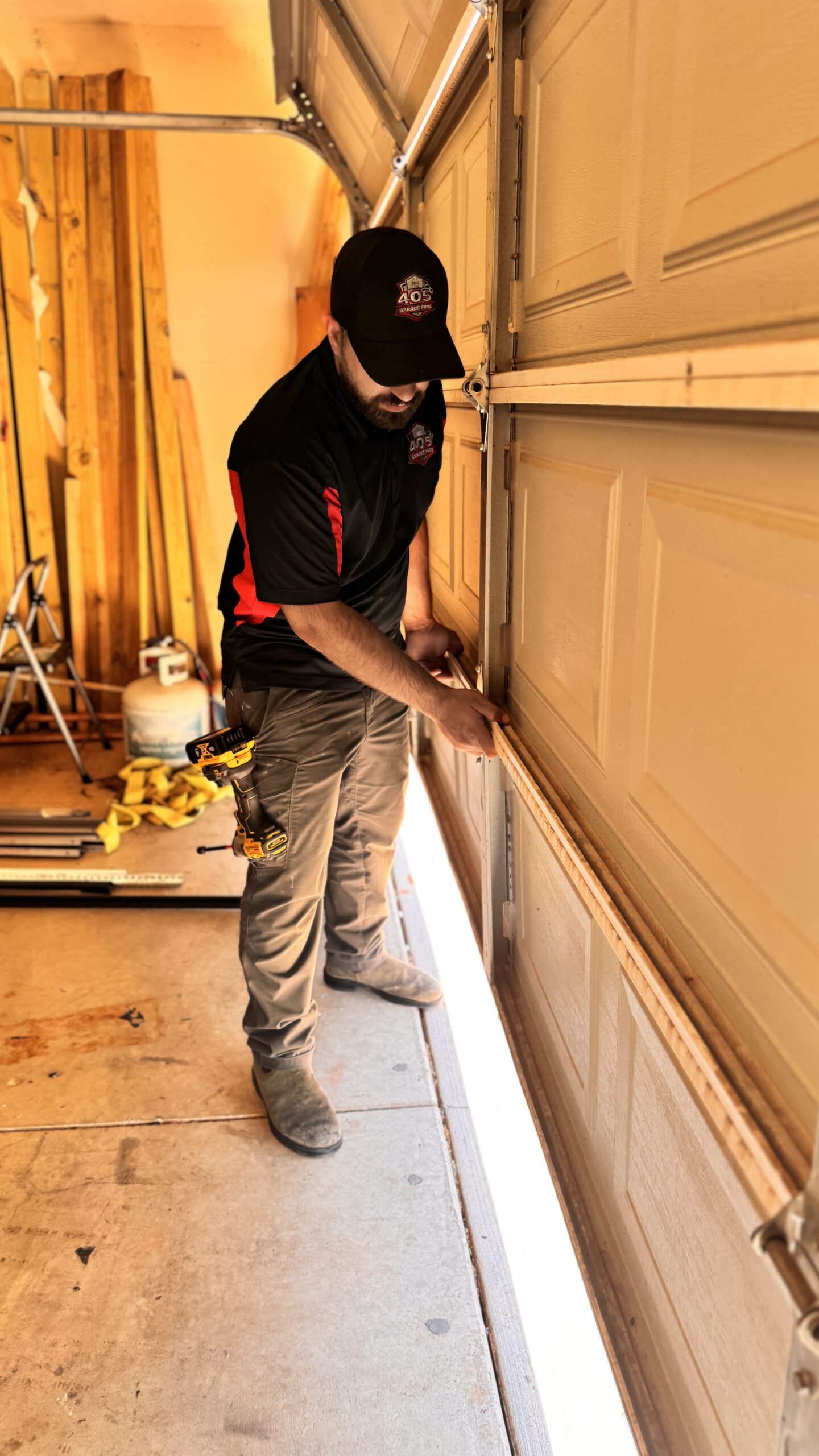
Catch the Problem Before It Leaves You Stuck
Most garage doors fail the same way: slowly, then all at once. A spring loses a little tension every year, a cable frays one strand at a time, a roller wears flat, and the opener quietly works harder to make up for it. Then one morning the spring snaps or the cable lets go, and the door is not going anywhere.
A garage door is usually the largest moving object in a home, and a typical two car door can weigh well over 150 pounds. The springs that lift it are under serious tension the whole time. That is why a yearly inspection is not an upsell, it is the cheapest way to avoid an emergency repair and a door that drops when it should not.
Book an inspection if your door has never been checked, if you just bought the house, if the door took a hit or a storm, or if it has started sounding or moving differently than it used to.
What We Check on Every Inspection
We go through the whole system, not just the part you noticed. A noisy door can be a dry roller or the first sign of a failing spring, and the only way to know is to look at all of it.
- Torsion or extension springs: wear, rust, gaps, and whether they are the right size for your door's weight.
- Lift cables and drums: fraying, loose strands, and even tension on both sides.
- Rollers and hinges: cracked or flat rollers, worn stems, loose or bent hinges.
- Tracks and brackets: alignment, bends, loose lag bolts and wall anchors.
- Door balance: with the opener released, a balanced door stays put about halfway up.
- Opener: drive chain or belt, gears, travel limits and close force.
- Auto-reverse: the door must reverse when it meets an obstacle.
- Safety sensors: alignment, wiring and the reverse test with the beam blocked.
- Sections and struts: cracks, dents, and loose fasteners that weaken the door.
- Weather seal and bottom fixture: gaps that let in water, dust and pests.
- Remotes, keypad and wall button: range, response and the lock function.

When to Schedule an Inspection
Once a Year
A yearly check catches wear while it is still a small adjustment. Many homeowners book it before summer or winter.
Buying or Selling a Home
Know the door's condition before closing. A door that works smoothly is one less item on an inspection report.
After an Impact or Storm
A bumped door or hail can bend tracks and sections in ways that are hard to see but easy to make worse.
It Sounds or Moves Different
Grinding, jerking, a slower open or a door that hangs crooked are all signs worth a look now, not later.
A Safety Test You Can Do Yourself
You can check the two most important safety features between inspections. First, lay a 2x4 board flat on the floor under the door and close it. The door should touch the board and reverse. Second, close the door and wave a broom handle through the sensor beam near the floor. The door should stop and go back up.
If the door does not reverse in either test, stop using the opener to close it and call us. That is a safety problem, not a convenience one.
What Happens After the Inspection
Many small issues, like lubrication, loose hardware and opener limit settings, get handled during the visit. For anything bigger, you get a plain explanation of what we found, what it means and a firm price. Nothing moves forward without your OK, and if the door is in good shape, we will tell you that too.
Why Homeowners Choose 405 Garage Pros
We look at the whole door, explain it in plain words and quote one firm price. No pressure, no surprise charges, and a door that works the way it should when we leave. We serve Edmond, Norman, Tulsa and the surrounding Oklahoma City and Tulsa areas, with same day options most days.
FAQ
How often should a garage door be inspected?
Once a year is a good rule for most homes. Doors that run many times a day, or older doors on their original springs, benefit from a check sooner.
How long does a garage door inspection take?
Most inspections take well under an hour. If we find something that needs repair, we explain it and give you a firm price before doing any work.
What is the most common problem you find?
Worn springs and rollers, and doors that are out of balance. An unbalanced door makes the opener do the lifting, which wears out the opener too.
Can I inspect my garage door myself?
You can look for frayed cables, cracked rollers and loose hardware, and run the 2x4 and sensor tests. Do not adjust springs or cables yourself, they are under high tension and can cause serious injury.
Do you inspect the opener as well as the door?
Yes. We check the drive, gears, travel limits, close force, auto-reverse, safety sensors, remotes and the wall button.
Should I get the garage door inspected before buying a house?
It is a smart idea. You will know the condition of the springs, opener and door before you move in, instead of finding out on the first cold morning.