
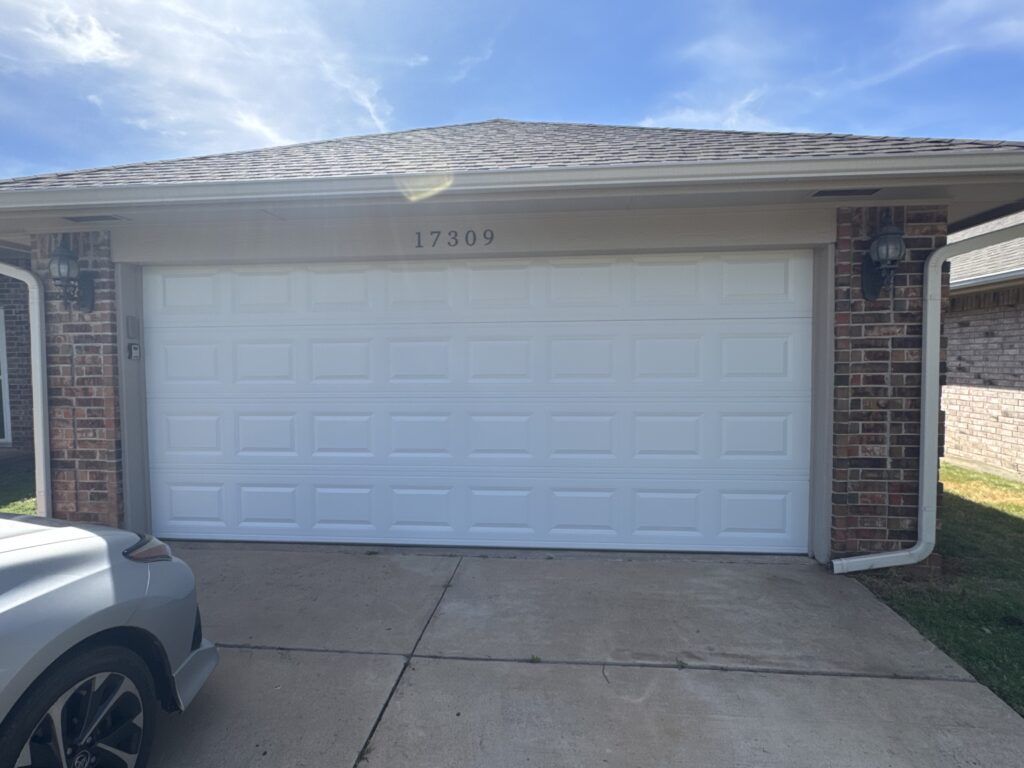
A garage door that stops halfway up but closes normally may have a problem with its counterbalance system, opener settings, or moving hardware. The difference between opening and closing provides an important clue about the cause. Understanding how these components work can help homeowners recognize warning signs, avoid unsafe adjustments, and determine when professional garage door repair is necessary before further damage occurs.
The Door Goes Down Fine, So Why Won’t It Go Up?
Your garage door starts opening normally, rises a few feet, and suddenly stops. You press the remote again, but it refuses to go higher. Strangely, when you close it, the door travels smoothly back to the floor without any obvious trouble.
This behavior can be confusing because the same tracks, rollers, and opener are involved in both directions. However, a garage door doesn’t experience identical forces while opening and closing. The springs, motor, and door’s weight interact differently as its position changes.
A garage door sticking halfway during upward travel may indicate that something is making the door harder to lift, or the opener is stopping because it detects an unexpected condition. The fact that closing works normally is useful information, but it doesn’t automatically identify the damaged component.
Opening the Door Requires a Different Kind of Effort
A residential garage door can weigh well over 100 pounds, depending on its size and construction. Although the opener moves the door, torsion or extension springs provide much of the lifting assistance by counterbalancing its weight.
As the door rises, its sections travel from the vertical tracks into the horizontal tracks near the ceiling. This changes how the door’s weight is supported, and resistance may become noticeable at certain points during movement.
A door may close normally but struggle to open if the counterbalance system isn’t working properly. Gravity assists downward movement, while lifting requires adequate spring assistance and smooth mechanical operation. This is why a normal closing cycle doesn’t necessarily mean the door is functioning correctly.
The Springs May No Longer Be Providing Enough Lift
Garage door springs don’t need to break completely before problems become noticeable. Their performance can change through wear, incorrect adjustment, or damage to the counterbalance assembly.
A door that becomes unusually heavy during opening may cause the opener to stop as it encounters more resistance than expected. In some situations, the motor starts the lifting process but cannot continue through the full travel range.
The Door & Access Systems Manufacturers Association (DASMA) explains that garage door openers are designed to operate properly balanced doors. Installing a stronger motor isn’t a suitable solution for an improperly balanced door.
A technician can assess spring condition and door balance using appropriate procedures. Homeowners should avoid adjusting torsion springs, lift cables, or bottom brackets because these components can remain under dangerous tension.
When the Opener Decides Something Is Wrong
Modern garage door openers are designed to monitor door movement and respond to unexpected operating conditions. Depending on the model, they may use motor feedback, travel-position information, and force monitoring to determine if the door is moving as expected.
If the opener encounters unusual resistance while lifting, it may stop rather than continue applying force. This protective behavior can make an opener problem look similar to a mechanical problem.
Manufacturer guidance from Chamberlain describes how travel settings and obstruction detection affect garage door movement. Certain models also provide diagnostic lights or error codes when the operator detects a problem.
A motor stopping doesn’t necessarily mean the motor has failed. It may be responding to resistance elsewhere in the system, which is why technicians should examine the door’s mechanical condition before changing opener settings.
A Small Obstruction Can Matter More on the Way Up
A garage door doesn’t always encounter the same resistance in both directions. Rollers move through the curved tracks, hinges change angles, and door sections shift position as the assembly travels overhead.
Consider a slightly distorted track near the upper curve. A roller might encounter extra resistance as the door rises into that section, while its movement in the opposite direction appears less troublesome. The same pattern can occur when a damaged hinge or panel joint interferes at a particular angle.
The location of the stopping point can help narrow down the cause:
- Near the bottom: A door that struggles soon after lifting may have a counterbalance issue, mechanical interference, or a problem with the opener’s initial movement.
- Near the curved tracks: Rollers, hinges, or section alignment may be creating resistance as the door changes direction.
- Near the fully open position: An overhead obstruction, incorrect travel setting, or horizontal-track problem may be involved.
- At different heights: Intermittent mechanical resistance or an opener-related fault may need investigation.
These patterns provide clues rather than definite diagnoses. A technician must examine the equipment to determine why movement is being interrupted.
Could Incorrect Travel Settings Be Stopping the Door?
Garage door openers use travel settings to control where the door stops. Older models have adjustment controls, while newer systems often use electronic programming. Incorrect opening limits can cause the door to stop too early, especially after installation or reprogramming.
Unlike mechanical binding, a travel-setting issue may cause the door to stop consistently without shaking or unusual resistance. However, this alone doesn’t confirm the problem.
A technician should check the door’s movement and follow manufacturer instructions before adjusting the settings. Increasing opener force to overcome mechanical resistance can hide an unsafe condition rather than fix it.
What If the Problem Started After Installing a New Opener?
Replacing an old garage door opener can reveal problems that previously went unnoticed. The newer system may respond differently to resistance, especially if its monitoring features or travel settings differ from those of the original unit.
An installation issue can also affect performance. An incorrectly positioned opener rail, unsuitable trolley connection, or improper travel programming may interfere with the door’s intended movement.
However, the new opener shouldn’t immediately be blamed simply because the problem appeared after installation. Existing spring wear, track resistance, and door balance still need to be evaluated. A proper diagnosis separates the opener’s operation from the door’s mechanical movement, then checks that both systems are compatible and functioning correctly.
What Can You Safely Check Without Taking Anything Apart?
When a door stops partway up, the temptation is to press the remote several times or pull the emergency release. Neither action is a good starting point when the door’s condition is uncertain.
Repeated attempts can place additional strain on damaged hardware, while disconnecting an elevated door can allow an improperly balanced assembly to move unexpectedly.
Homeowners can make a few observations from a safe position without attempting repairs. Look for visible objects near the tracks, listen for unusual motor sounds, and notice if diagnostic lights flash on the opener. Record the stopping position and any changes that occurred before the problem began.
Avoid standing beneath the partially opened door, forcing it upward, or handling springs and cables. If the door is crooked, visibly damaged, or suspended in an unusual position, keep the area clear and arrange professional assistance.
The Direction of Travel Helps a Technician Find the Cause
A useful repair assessment goes beyond confirming that the opener stops halfway. The technician needs to establish what happens during upward movement and compare it with the door’s behavior while closing.
The inspection may involve checking the counterbalance system, examining rollers and track alignment, reviewing opener diagnostics, and testing the completed repair according to manufacturer instructions.
A door that reaches the floor smoothly but struggles to lift requires attention to the forces involved in opening. Understanding that distinction can prevent unnecessary opener replacement when the actual problem lies elsewhere.
A Few More Questions About Halfway-Stopping Garage Doors
Q1. Can weak garage door springs cause the opener to stop without making noise?
A1. Yes. Reduced spring assistance can make the door harder to lift, causing an opener to stop when it encounters excessive resistance. Some systems may stop without a loud mechanical sound.
Q2. Why does my garage door stop halfway only sometimes?
A2. Intermittent problems may involve changing mechanical resistance, an unreliable movement sensor, or an opener fault. The pattern and any diagnostic codes can help a technician investigate.
Q3. Can cold weather make a garage door stop during opening?
A3. Cold temperatures can affect lubricants, seals, and the behavior of certain materials. However, a consistent halfway stop should not automatically be blamed on weather without checking the equipment.
Q4. Will resetting my garage door opener fix the problem?
A4. A reset or travel reprogramming may help with certain electronic faults, but it won’t repair worn springs, damaged tracks, or binding hardware. The mechanical condition should be checked first.
Q5. Can a garage door opener overheat and stop while lifting?
A5. Some openers include thermal protection that can interrupt operation when the motor becomes too hot. Repeated operation, mechanical resistance, or motor problems may contribute to overheating.
Q6. Why does the opener light flash when the door stops halfway?
A6. Certain openers use flashing lights to indicate an obstruction or operating fault. The meaning depends on the brand and model, so consult the manufacturer’s diagnostic instructions.
Q7. Can I use the garage door manually if it won’t open all the way?
A7. A malfunctioning or partially raised door can move unexpectedly, particularly when its counterbalance system is damaged. Avoid disconnecting or manually moving it until a trained technician confirms it is safe.
Q8. Does a halfway-stopping garage door always need a new opener?
A8. No. Problems involving balance, track resistance, or worn hardware may be corrected without replacing the opener. Replacement becomes relevant when the operator itself is defective or unsuitable.
Sometimes the Most Useful Clue Is the Timing Maybe the door stops after rising a few feet, or perhaps the trouble begins just as the panels curve overhead. Those differences matter more than another unsuccessful press of the remote. Homeowners can share that pattern with 405 Garage Pros to help focus the inspection on the behavior that actually needs explaining.