
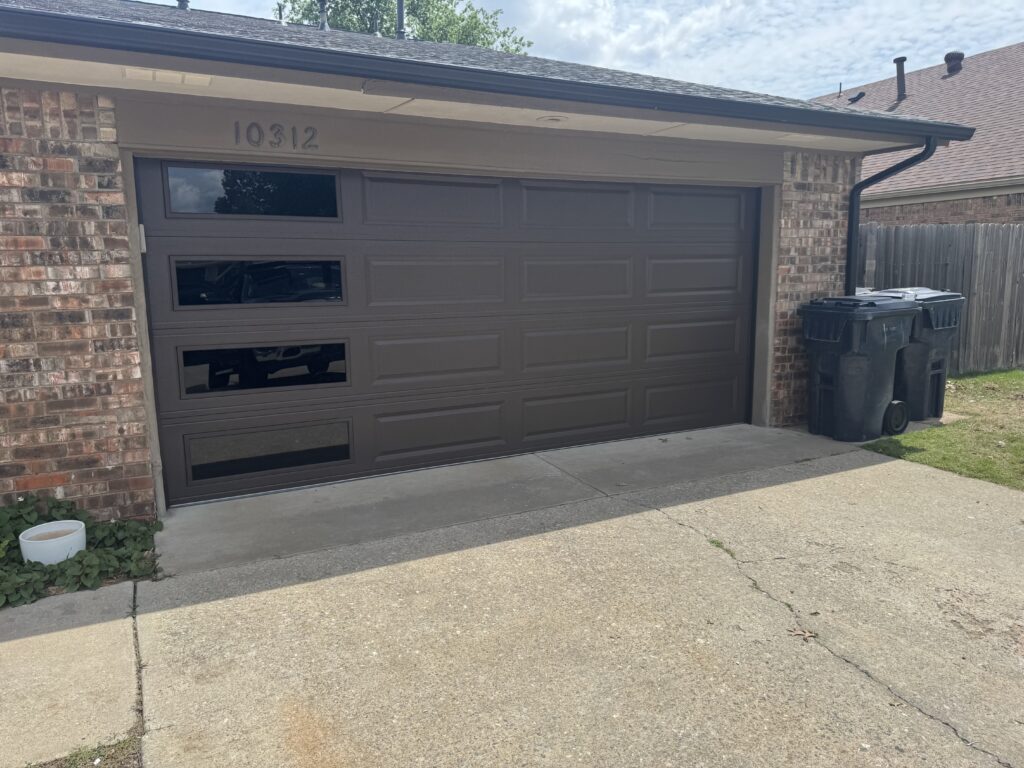
A garage door can refuse to close even when both safety sensors appear to be working normally. Misalignment, sunlight, loose wiring, track resistance, travel settings, and opener problems can all cause the issue. Understanding the possible causes can help homeowners avoid unnecessary repairs and know when professional help is needed. This post explains what to check before replacing parts or calling for garage door solutions in OKC.
Why the Sensors May Look Fine but Still Cause Problems
Safety sensors sit near the bottom of the garage door tracks. They use an invisible beam to confirm that nothing is blocking the doorway before the door closes.
The confusing part is that the sensor lights can appear normal while the system still has a problem. A small alignment issue, damaged wire, loose connection, or interference from direct sunlight can affect how reliably the sensors communicate with the opener.
This is one reason homeowners may spend time cleaning or adjusting the sensors without fixing the actual problem.
Check for Anything Blocking the Doorway
Start with the simplest possibility.
Look across the floor and the area between the sensors. Small objects such as boxes, tools, toys, leaves, or other items can interrupt the safety beam.
Even if nothing is directly sitting between the sensors, check the tracks and lower sections of the door. A damaged roller or piece of hardware can sometimes affect the door’s movement and make the opener react as if something is wrong.
Remove anything that could interfere and try the door again.
Sunlight Can Interfere With the Sensors
Direct sunlight can sometimes affect garage door photo-eyes. This is easy to miss because the sensors may appear clean and properly aligned.
If the problem happens mainly during a certain part of the day, pay attention to where the sunlight falls. Bright light entering the sensor area can interfere with the beam and prevent normal closing.
A temporary change in the angle or position of the sunlight can make the problem appear to fix itself later, which can make the issue especially confusing.
The Sensors May Need More Than a Quick Adjustment
Both sensors need to face each other correctly. They also need to remain firmly attached to their brackets.
A sensor that has shifted slightly may still show an indicator light but fail to communicate reliably with the opener. Loose brackets, vibration, bent mounting points, and damaged wiring can all contribute to the problem.
Check that both sensors are secure and facing each other. Avoid making major electrical repairs yourself. If the wiring looks damaged or the sensors continue to malfunction, professional garage door solutions in OKC can help identify the actual fault instead of replacing parts unnecessarily.
Test the Wall Button and Remote Separately
The wall control and remote can provide useful clues.
If the remote does not work but the wall button does, the issue may involve the remote, its battery, or the opener’s receiver. If neither control operates the door correctly, the problem may be deeper within the opener or door system.
Pay attention to exactly what happens when you press the button.
Does the door start moving and reverse? Does it remain completely still? Does the opener light flash? Does the motor run while the door barely moves?
These details can narrow down the possible cause.
Look at the Tracks, Rollers, and Door Movement
A garage door should move smoothly along its tracks. If it becomes difficult to lift, drags against the track, or moves unevenly, the opener may struggle to close it.
Damaged rollers, bent tracks, loose hardware, and obstructions can increase resistance. The door may start closing and then stop or reverse because the opener detects unusual resistance.
Watch the door as it moves.
If one side moves faster than the other, the door shakes, the rollers make unusual sounds, or the panels appear to bind, the problem may not be related to the sensors at all.
The Door Could Be Out of Balance
Garage doors rely on springs to counterbalance their weight. When the system is properly balanced, the opener does not have to carry the entire load.
A door that feels unusually heavy or drops quickly can indicate a balance or spring-related problem. This can also put additional stress on the opener.
Do not attempt to adjust or replace torsion or extension springs without the right training and equipment. These components are under significant tension and can cause serious injuries if handled incorrectly.
For this type of issue, getting the door inspected is safer than trying to force it back into operation.
Travel Limits Can Also Stop the Door
Garage door openers use travel settings to determine how far the door should move.
If these settings are incorrect, the opener may stop too early, reverse, or behave differently from normal. This can happen after installation, adjustments, component replacement, or other changes to the opener system.
Before changing opener settings, check the manufacturer’s instructions for your specific model. Incorrect adjustments can create additional operating problems.
If the settings seem correct but the door still refuses to close, the opener may need a more detailed inspection.
What If Holding the Wall Button Makes the Door Close?
Some homeowners notice that the door closes only when they continuously hold the wall control.
This behavior can point toward a safety sensor or control issue. It should not be treated as a permanent solution.
The safety system exists to prevent the door from closing when an obstruction is detected. Bypassing normal operation can remove an important layer of protection.
If the door only closes while the button is held down, stop relying on that method and find the reason the normal closing cycle is failing.
When the Opener May Be the Real Problem
Sometimes the door itself is fine, and the sensors are not the main problem.
Older openers can develop issues with internal components, wiring, travel settings, or control boards. An opener can also struggle when paired with a door that has become heavier or harder to move over time.
Replacing the entire opener is not always necessary. A proper inspection can help determine if the issue is related to a specific component or if the unit has reached the point where replacement makes more sense.
If a replacement is needed, proper garage door installation in OKC can ensure the new opener is correctly matched to the door and configured for safe operation.
Should You Repair or Replace the Garage Door?
Not every closing problem means you need a new garage door.
A sensor adjustment, damaged wire, worn roller, track issue, or opener repair may solve the problem. Replacement becomes more reasonable when the door has extensive damage, repeated failures, severe wear, or an outdated system that no longer makes financial sense to repair.
The right decision depends on the condition of the entire system, not just one failed component.
If the door itself is damaged beyond practical repair, new garage door installation in OKC can provide a longer-term solution. The new door should be properly sized, balanced, and installed with compatible hardware and an appropriate opener.
Avoid Replacing Parts Without Finding the Cause
A common mistake is replacing the first part that appears suspicious.
A homeowner may replace the sensors, only to find that the door still will not close. Then the opener becomes the next suspect, followed by the rollers or wiring.
This approach can become expensive quickly.
A better approach is to identify how the door behaves, inspect the basic safety components, and then determine where the failure is occurring. Professional garage door solutions in OKC should focus on finding the cause rather than automatically recommending multiple replacement parts.
Frequently Asked Questions
Q1. Can garage door sensors fail even when the lights are on?
A1. Yes. The lights may appear normal even when alignment, wiring, sunlight, or communication issues are affecting sensor performance.
Q2. How do I know if sunlight is affecting my garage door sensors?
A2. If the door refuses to close mainly during certain hours, direct sunlight may be interfering with the sensor beam.
Q3. What should I check when my garage door starts closing and reverses?
A3. Check for obstructions, sensor alignment, track problems, unusual resistance, and changes in the door’s movement. If these checks do not reveal the cause, the opener may need inspection.
Q4. Why does my garage door work from the wall button but not the remote?
A4. The remote battery, remote itself, or the opener’s receiver may be responsible. Testing both controls separately can help narrow down the problem.
Q5. Can a heavy garage door cause the opener to stop closing?
A5. Yes. A heavy or unbalanced door can place extra strain on the opener and may indicate a spring, cable, or mechanical problem.
Q6. Should I adjust my garage door opener travel limits myself?
A6. Minor adjustments may be possible on some models, but follow the manufacturer’s instructions carefully. Incorrect settings can create additional operating problems.
Q7. Is it safe to keep holding the wall button to close the garage door?
A7. No. This should not become a regular workaround because it can bypass normal safety behavior. The underlying problem should be identified and corrected.
Q8. When should I call a professional for a garage door that won’t close?
A8. Get professional help if basic checks do not solve the issue, or if the door is heavy, uneven, damaged, noisy, or showing signs of spring, cable, track, or opener problems.
A Garage Door That Won’t Close Shouldn’t Be Ignored
A garage door that refuses to close is more than an inconvenience. The cause could be as simple as sunlight or sensor alignment, but it could also involve the tracks, rollers, springs, cables, opener, or door balance. Start with the basic checks, but avoid forcing the door or bypassing its safety system. If the problem continues, Garage Door Pros can provide professional garage door solutions in OKC, identify the source, and recommend the most practical repair.