
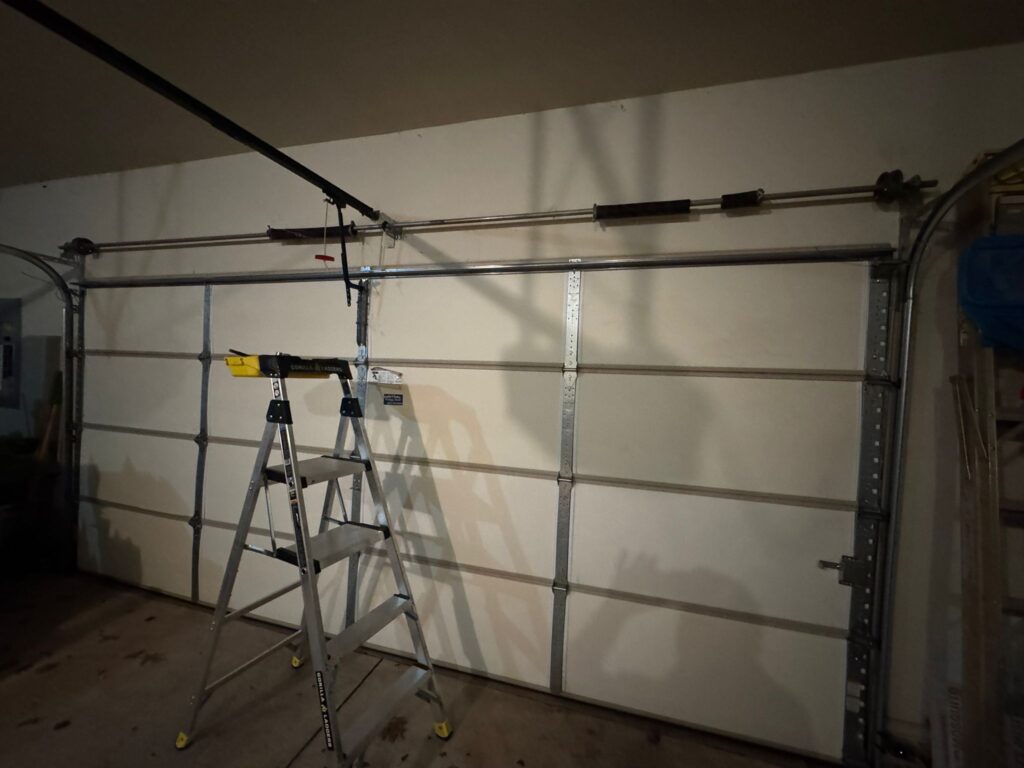
As temperatures fall across Tulsa, a garage door can start behaving differently after months of smooth operation. Cold can make worn rollers, stiff seals, weak springs, and poor lubrication more noticeable. A door that worked well in fall may become slow, noisy, or difficult to open in winter. The weather may not create the fault, but it can expose a problem that was already developing.
Cold Weather Can Reveal Hidden Garage Door Problems
A garage door can seem perfectly healthy in October and start acting up once winter arrives. The opener may strain, the door may move slowly, or the bottom seal may stick to the floor.
That pattern is worth noticing in Tulsa. National Weather Service climate data lists average low temperatures of 39.4°F in November, 31.1°F in December, and 28.0°F in January. Colder conditions can make existing wear and resistance easier to notice.
Cold Weather Can Expose a Weak Part
A residential garage door has several parts working together. Springs help balance the door, rollers travel through the tracks, hinges connect the sections, and the opener provides the lifting force.
A worn part may still work during mild fall weather. Once temperatures fall, friction, stiffness, or alignment problems can become more obvious. Cold is often the trigger, not the real cause.
Lubrication Problems Can Show Up Fast
Moving parts need the right kind of lubrication. Clopay notes that some lubricants can harden or become gummy as temperatures drop, making the door harder to move. It recommends garage-door lubricants and says silicone-based products can maintain their viscosity across a wide temperature range.
Adding more lubricant is not always the answer. Clopay advises against lubricating the tracks, and nylon rollers should not be lubricated. Too much lubricant can also attract dirt.
If the door becomes noisy or stiff, the rollers, hinges, springs, and tracks should be considered too.
Old Seals Can Become Harder in Winter
The seal along the bottom helps close the gap between the door and floor. It also limits drafts, moisture, and debris.
Cold weather can make older seals less flexible. Clopay says cracked, crushed, or deformed seals should be replaced and notes that silicone-based lubricant can help keep some seals flexible in very cold weather.
Look for a visible gap after the door closes. A seal that no longer touches the floor evenly can let cold air into the garage.
Springs May Reveal a Problem
Garage door springs carry much of the door’s weight. A weak spring can make the door feel heavy and force the opener to work harder.
Winter can make that weakness easier to notice, but springs also wear through normal use. A cold morning may simply reveal a spring that was already worn.
Do not remove or adjust springs yourself. Amarr warns that high spring tension can cause serious injury and advises homeowners to contact a trained garage door professional when spring damage is suspected.
Your Opener May Not Be the Real Problem
A noisy or slow opener can get blamed for a door problem when the door itself is creating extra resistance.
Suppose the door becomes harder to lift and the opener starts sounding strained. The motor may be reacting to resistance from worn rollers, alignment problems, a stiff seal, or spring trouble.
Replacing the opener first can miss the real issue. The door and opener should be assessed together.
A Frozen Bottom Seal Can Stop the Door
Moisture can freeze around the bottom of the garage door during a cold spell. The seal may stick to the floor, leaving the opener trying to pull against frozen material.
Do not keep pressing the opener button to force it free. Clopay advises against using ice melt directly on a garage door, especially a metal door, because it can damage the door.
Find out what is preventing movement before forcing the door. A stuck seal can become a damaged seal if the opener keeps pulling.
Tulsa Weather Can Put These Problems in the Spotlight
Tulsa can move from mild afternoons to freezing nights during winter. NWS records show the city has experienced an all-time January low of -16°F.
You do not need an extreme cold snap to notice a garage door problem. A normal freeze may be enough to expose stiff seals, rough rollers, or a door that is slightly out of balance.
The timing is useful information. If the door struggles during cold mornings but improves later, mention that pattern during a service visit.
Signs That Need More Attention
Cold weather can reveal a problem, but it should not explain every change.
Watch for:
- A door that suddenly feels much heavier
- Grinding, scraping, or popping sounds
- Jerky or uneven movement
- A door that stops at the same point
- A visible gap along the bottom or sides
- An opener that strains more than usual
You can safely observe the door without taking it apart. Look at the seal, watch its movement, and listen for new sounds. Avoid adjusting springs or other high-tension parts.
When Garage Door Service Makes Sense
A service visit becomes useful when the problem keeps returning, gets worse, or appears alongside other warning signs.
A door that is slightly slower on one cold morning may simply need observation. A door that becomes heavy every winter, strains the opener, and makes grinding sounds deserves a closer look.
The useful question is not just, “Why is it cold?” It is, “What changed in the door when the temperature dropped?”
Winter Garage Door Problems: Common Questions
Q1: Why does my garage door work in fall but struggle in winter?
A1: Cold can make existing wear more noticeable. Stiff seals, worn rollers, poor lubrication, alignment issues, or a weak spring can add resistance.
Q2: Can cold weather make a garage door opener work harder?
A2: Yes. Extra resistance from the door can increase the load on the opener.
Q3: Should I lubricate my garage door tracks in winter?
A3: No. Clopay advises cleaning the tracks instead. Lubricant can make roller movement harder.
Q4: Why is my garage door seal sticking to the floor?
A4: Moisture can freeze around the bottom seal. An older seal may also become less flexible in cold weather.
Q5: Does a heavy garage door always mean the spring is broken?
A5: No. Other problems can create resistance too, but a sudden change in weight deserves attention.
Q6: Should I force the garage door open if the seal is frozen?
A6: No. Forcing the door can damage the seal or other components. Find out what is holding it in place first.
Q7: Can an insulated garage door help during a Tulsa winter?
A7: Insulation can reduce heat transfer through the door. Proper weather seals also matter.
Q8: When should I call for garage door service?
A8: Have the door checked when winter problems repeat, the door becomes unusually heavy or noisy, movement becomes uneven, or the opener starts straining.
Let the Door Tell You What Changed
A garage door that struggles only in winter is giving you a useful clue. The temperature may be exposing wear that was easy to miss during milder months.
Notice what feels different. Is the door heavier, noisier, or moving unevenly? Has the bottom seal become stiff or stopped sitting evenly? These changes can help reveal the underlying problem before the door stops moving altogether. 405 Garage Pros provides residential garage door service in Tulsa, including repairs, opener work, spring replacement, track and cable service, panel replacement, and maintenance. We look at the full system so the winter symptom is not mistaken for the actual cause.