
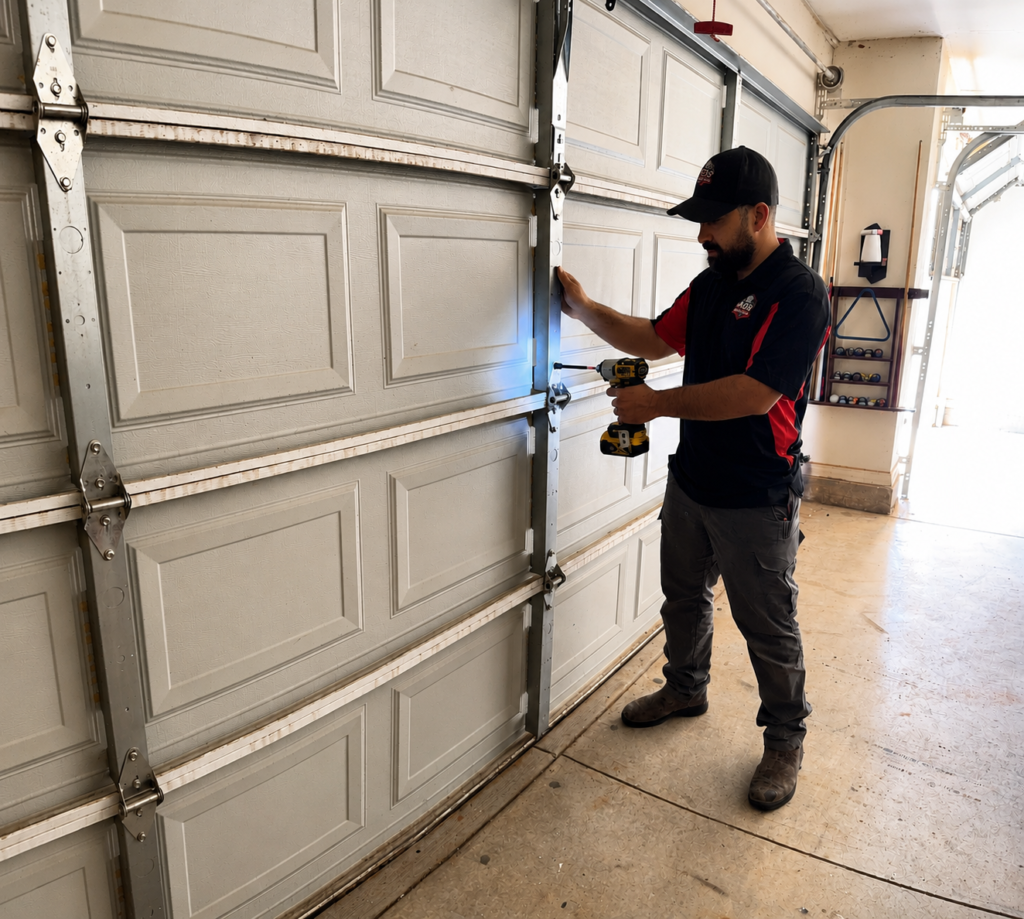
A garage door can make plenty of normal sounds as it moves, but a sudden change in noise often points to wear, loose hardware, poor lubrication, or a problem with the opener. Some noises are minor, while others can signal a developing mechanical problem. Knowing the difference can help homeowners address issues early and avoid a more serious need for Oklahoma City garage door repair.
That Noise Wasn’t There Last Week
Garage doors are heavy mechanical systems made up of springs, cables, rollers, hinges, tracks, pulleys, and an opener. Every part has a job, and several move every time the door opens or closes. A new squeak or grinding sound can be an early clue that something is rubbing, wearing out, or sitting out of alignment.
The tricky part is knowing which noises deserve attention. A little spring noise can be harmless, while a sudden bang or persistent grinding deserves a closer look. Here are eight sounds worth paying attention to.
1. Squeaking That Gets Louder
A high-pitched squeak is often linked to friction. Rollers, hinges, springs, and other moving parts can become noisy when lubrication wears away, or components start to wear.
Sometimes the fix is simple. A suitable garage door lubricant can reduce friction around rollers, hinges, and springs. The tracks themselves should not be treated like a moving part that needs lubrication.
Persistent squeaking tells a different story. Worn rollers, loose hardware, or alignment problems may need attention. If lubrication changes nothing, don’t keep spraying and hoping for silence.
2. Grinding From the Door or Opener
Grinding is harder to ignore because it often sounds rough and mechanical. It can come from worn rollers, track alignment problems, or components inside the garage door opener. A misaligned track can force the rollers to work harder than they should. That extra friction can create grinding and put more stress on other parts of the system.
Listen closely to where the noise comes from. A sound near the ceiling may point toward the opener, while grinding along the sides of the door can suggest a roller or track issue.
3. A Loud Bang From Inside the Garage
Few garage door sounds are as startling as a sharp bang.
A broken spring can make a loud noise when it fails. You may then notice that the door becomes extremely heavy or refuses to open normally. Garage door springs carry substantial tension, so this is not a good time to grab a toolbox and experiment.
If you hear a sudden bang and the door behaves differently afterward, leave the spring system alone. Professional inspection is the safer choice.
4. Rattling During Movement
A rattling door may have something loose.
Bolts, nuts, hinges, brackets, chains, or other hardware can loosen over time as the system repeatedly moves. Dirt and debris can also contribute to noisy operation, especially around moving components.
Not every rattle means a major repair. Still, don’t ignore a noise that keeps getting worse. A small loose component can allow other parts to move incorrectly and create more wear.
5. Popping or Snapping Sounds
A pop can come from different parts of the door, so the timing matters. If you hear occasional popping around the spring area, friction between spring coils can sometimes be responsible. Clopay notes that older springs may squeak or chatter as their coils rub together.
A sudden, loud pop combined with a door that becomes heavy, crooked, or difficult to lift is more concerning. That combination can indicate a spring or cable problem and calls for professional attention.
6. Clunking When the Door Moves
A clunk may sound harmless because it is not always loud. The problem is that repeated clunking can point to loose or worn components.
Rollers and hinges guide the door through its travel. If one is damaged or loose, the door may shift slightly as it moves, producing a knock or clunk. Misaligned tracks can also create rough movement and unusual sounds.
Watch the door while listening. If it jerks, shakes, slows down, or moves unevenly at the same time, the noise is giving you useful information.
7. Screeching or Metal-on-Metal Noise
A harsh screech usually means friction deserves attention. Metal rollers can become noisy as they age. Hinges may also produce sharp sounds when they become dry or worn. Clopay recommends checking rollers, hinges, and other moving components when a garage door develops persistent noise.
Don’t assume more lubricant will solve everything. If the roller is damaged, the track is bent, or the hardware is worn, the underlying problem needs to be addressed.
8. A Straining or Humming Opener
Sometimes the garage door itself isn’t the source of the noise. The opener may be working harder because the door has become difficult to move. A humming opener that runs while the door barely moves can point toward problems involving the door, springs, or cables. An unbalanced door also places extra strain on the opener and other components.
Pay attention to changes. If the opener used to lift the door smoothly and now sounds strained, don’t assume the motor suddenly became weak. The door may be creating the extra load.
When a Noise Means Stop Using the Door
Some sounds are annoying. Others are warnings.
Stop using the door and seek professional help if you notice a broken spring, frayed cable, door off its track, severe grinding, or a door that suddenly becomes very heavy. Springs and cables are under high tension, and manufacturers warn homeowners not to adjust or repair these components themselves.
A damaged cable deserves particular attention. Frayed cables can break, and a cable that comes off the drum can cause the door to move unevenly.
A Quieter Door Starts With Basic Care
Not every strange sound means an expensive repair. Regular inspection can catch worn rollers, loose hardware, damaged cables, and other issues before they become bigger problems.
Look and listen during a normal opening and closing cycle. Pay attention to new sounds, uneven movement, shaking, or hesitation. Overhead Door recommends regular visual checks of springs, cables, rollers, pulleys, and other hardware, while also warning against DIY work on high-tension components.
A simple monthly check can tell you a lot. You don’t need to take the door apart to notice that something has changed.
Common Concerns About a Noisy Garage Door
Q1. Why is my garage door suddenly squeaking?
A1. Squeaking can come from dry or worn rollers, hinges, springs, or other moving parts. Lubrication may help with some minor noise, but continued squeaking can point to worn components or alignment problems.
Q2. Is a noisy garage door dangerous?
A2. Not always. Some noises are caused by minor friction or loose hardware. Sudden bangs, severe grinding, damaged springs, frayed cables, or major changes in door movement deserve professional inspection.
Q3. Why does my garage door make a loud bang?
A3. A loud bang can occur when a garage door spring breaks. If the door becomes heavy or stops working normally after the sound, avoid operating it and have the system inspected.
Q4. Can I fix a squeaky garage door myself?
A4. Minor lubrication and basic visual checks may help. Avoid adjusting springs, cables, bottom brackets, or other high-tension components. Those parts can cause serious injury if handled incorrectly.
Q5. Why does my garage door grind when opening?
A5. Grinding can result from worn rollers, track problems, loose hardware, or an issue inside the opener. The location of the noise can help identify the likely source.
Q6. Why is my garage door opener humming but the door isn’t moving?
A6. The opener may be running while the door has a spring, cable, balance, or mechanical problem. If the door is suddenly heavy or difficult to move, professional inspection is a safer option.
Q7. How often should garage door parts be checked?
A7. A visual inspection once a month is a useful general practice. Check the springs, cables, rollers, pulleys, and other visible hardware for signs of wear or damage.
Q8. When should I call for garage door repair?
A8. Call a professional when unusual noise continues, the door becomes uneven or heavy, a spring breaks, a cable is damaged, the door comes off its track, or the opener struggles to operate the door.
Don’t Wait for the Sound to Become a Stuck Door
405 Garage Pros provides garage door repair in Oklahoma City, Ok when unusual noises point to a problem that should not be ignored. Grinding, clunking, banging, or strange opener sounds can all signal worn or damaged parts. We identify the source of the noise and recommend the right repair instead of treating every noisy door the same way.