
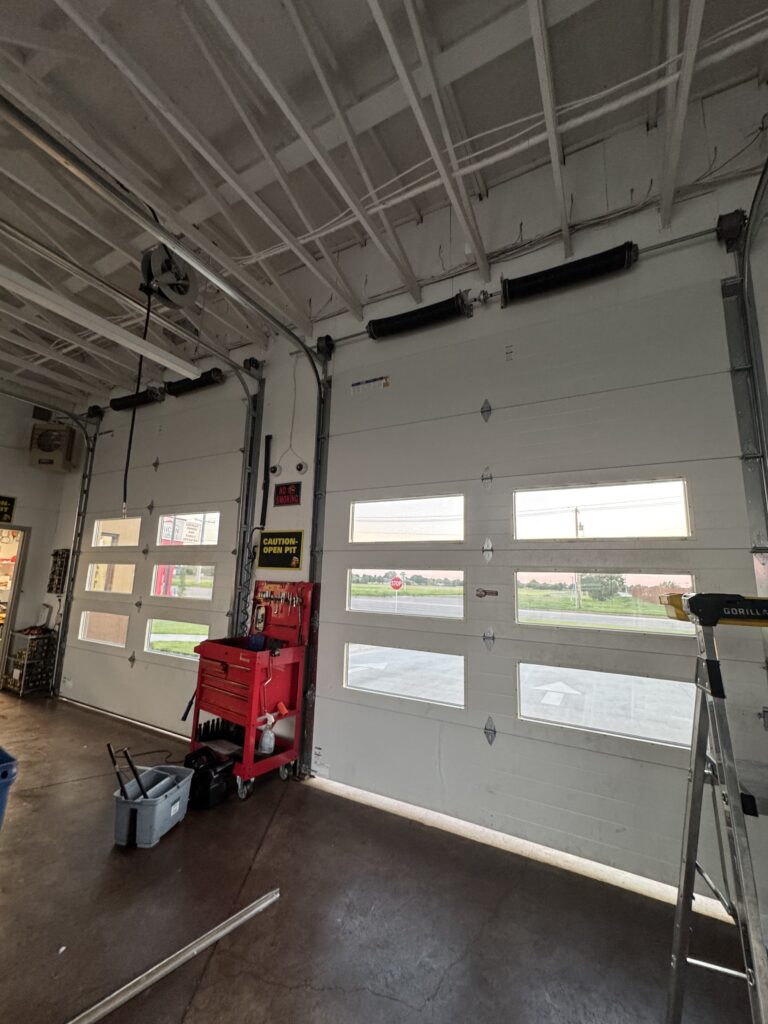
Repeated commercial garage door breakdowns are rarely just bad luck. Frequent failures can point to heavy daily use, worn parts, impact damage, poor fit, or a door that no longer suits the building. This post helps business owners spot patterns, decide when repair makes sense, understand when replacement may be better, and reduce disruptions before another breakdown stops operations again.
A Repeated Failure Is a Clue
A commercial garage door that breaks once can be a repair issue. A door that keeps failing every few weeks deserves a closer look. Replacing the same cable, spring, roller, or other part again and again may hide a larger problem.
Businesses often focus on getting the door moving because a blocked bay can delay deliveries, staff, service vehicles, or production. The more useful question is what keeps causing the failure.
Look for the Pattern, Not Just the Latest Failure
Start with the repair history. Note what failed, how often it happened, and what the door was doing when the issue appeared.
Repeated cable problems may point to alignment or hardware concerns. Roller failures can suggest friction or track trouble. Damage after vehicle contact needs a different response than a component that fails during normal use.
Commercial doors can handle far more cycles than residential systems. Garaga notes that commercial springs may be selected for 25,000, 50,000, 75,000, or 100,000 cycles, depending on the application.
The basic question is simple: does the door match the traffic it handles?
High Traffic Changes the Wear Equation
A loading dock used dozens of times every day faces very different demands from a storage door opened a few times each week.
More deliveries, longer operating hours, extra shifts, or a busier receiving area can raise cycle counts. Garaga lists commercial operators built around different duty levels, including systems rated for more than 90 cycles per day.
Another repair may not solve the issue if the workload has changed.
Check What Is Happening Around the Door
Repeated breakdowns do not always begin inside the door system.
Forklifts, delivery trucks, carts, and equipment can hit tracks, panels, bottom sections, or protective hardware. A small impact may not stop the door immediately, yet it can create uneven movement and repeated wear.
Inspect the area around the opening for bent sections, dented tracks, impact marks, or damaged guards. Garaga notes that track protection can help in high-traffic areas exposed to forklifts.
Fixing a broken part without addressing repeated impact can leave the same problem waiting for the next service call.
Ask What Changed
Before approving another repair, ask what changed since the last one.
A door that worked reliably for years may now be reaching the end of useful service. Another may have started failing after traffic increased, or vehicles began using the opening differently.
A business expansion can put new pressure on an older system. The door may look fine while its workload has changed considerably.
Know When Repair Still Makes Sense
Repeated failures do not automatically mean the whole door needs replacement.
If a business keeps paying for commercial garage door repair, the focus should shift from replacing the failed part to finding the reason it keeps failing. Repair can make sense when the structure remains sound, and the problem involves an isolated component.
Commercial door manufacturers list repairs for broken cables, bent tracks, damaged sections, rollers, springs, and malfunctioning operators.
A useful repair conversation should cover what failed, why it failed, and what could make it fail again.
Watch for Signs the Door Has Outgrown Its Job
Replacement becomes worth considering when repair bills keep returning or the door no longer suits the facility.
Raynor notes that material, construction, maintenance, and usage all affect lifespan, while cycle count can matter more than calendar age when assessing commercial doors.
Look at the bigger picture:
- The same door needs frequent repairs.
- Traffic has increased substantially.
- Impact damage happens repeatedly.
- Several major components are aging together.
- The system no longer fits current operating demands.
A new door will not fix an unchanged operating problem. Still, the right commercial garage door installation can make sense when the current setup cannot keep up.
Maintenance Should Follow Usage
A quiet warehouse and a busy loading dock should not receive identical attention.
Commercial door guidance often ties preventive maintenance to cycle counts and operating demand. Garaga, for example, groups doors by annual cycle levels and recommends more frequent preventive care as use increases.
Staff can also watch for small changes: new noise, slower travel, hesitation, uneven movement, or visible wear.
A minor change is easier to investigate before it becomes a blocked loading bay.
Give Staff a Clear Stop Rule
Employees are often the first people to notice trouble.
Stop using the door if it moves unpredictably, sits crooked, makes a new grinding or snapping sound, or shows visible damage.
Keep people clear of the opening until the problem is assessed. Commercial doors contain heavy panels and spring-loaded components, and manufacturer guidance says maintenance should be handled by trained technicians.
Ask staff to report the door position, unusual sounds, and activity around the opening. That information can help reveal patterns across service calls.
Oklahoma City Adds Another Factor
Oklahoma City facilities also have to account for severe weather. The National Weather Service has issued recent severe thunderstorm warnings affecting Oklahoma City and nearby areas, including strong winds and hail.
Storms can leave debris around an opening or damage exterior components. After severe weather, inspect the area before returning a door to heavy use.
A door that suddenly sounds different or moves unevenly after a storm deserves attention.
Treat Repeated Failures as an Operations Issue
A commercial door problem affects more than the maintenance budget. A blocked loading bay can delay incoming materials, while a vehicle entrance that will not open can disrupt field crews. A door stuck open can also create security or climate-control concerns.
The goal is not simply to make the door move again. It is to understand why it keeps failing and choose an approach that suits the facility.
Questions Business Owners Ask After Repeated Door Failures
Q1. How often should a commercial garage door be inspected?
A1. The right interval depends on door type, usage, and manufacturer guidance. A high-traffic opening generally needs closer attention than one used only occasionally.
Q2. Should different doors in the same building have different maintenance plans?
A2. Yes. A receiving door, service bay, storage opening, and vehicle entrance can have very different usage levels.
Q3. What records should a facility manager keep?
A3. Keep the model, approximate age, repair history, major component replacements, damage events, and changes in traffic or use.
Q4. Can business growth increase door failures?
A4. Yes. More deliveries, longer operating hours, and extra shifts can increase the number of opening and closing cycles.
Q5. Does a new commercial door always need a new opener?
A5. No. Compatibility depends on the door’s size, weight, lift type, cycle demand, and the existing operator.
Q6. Can vehicle contact cause problems months later?
A6. Yes. An impact can shift or bend components without causing an immediate failure. Later problems may appear as uneven movement, noise, or repeated wear.
Q7. How can a business identify its most troublesome door?
A7. Compare repair frequency, downtime, parts replaced, traffic level, and recurring failure types across each opening.
Q8. What should happen after a repair?
A8. Confirm normal operation, update the repair record, and tell staff about any operating limits or concerns they should report.
When the Door Keeps Becoming Tomorrow’s Problem
A commercial garage door should not become something your team plans around. If employees already know which door is likely to fail next, the repair cycle has become part of the daily operation. 405 Garage Pros helps businesses step back and look at the bigger picture, so recurring repairs do not keep eating into time, money, and productivity.