
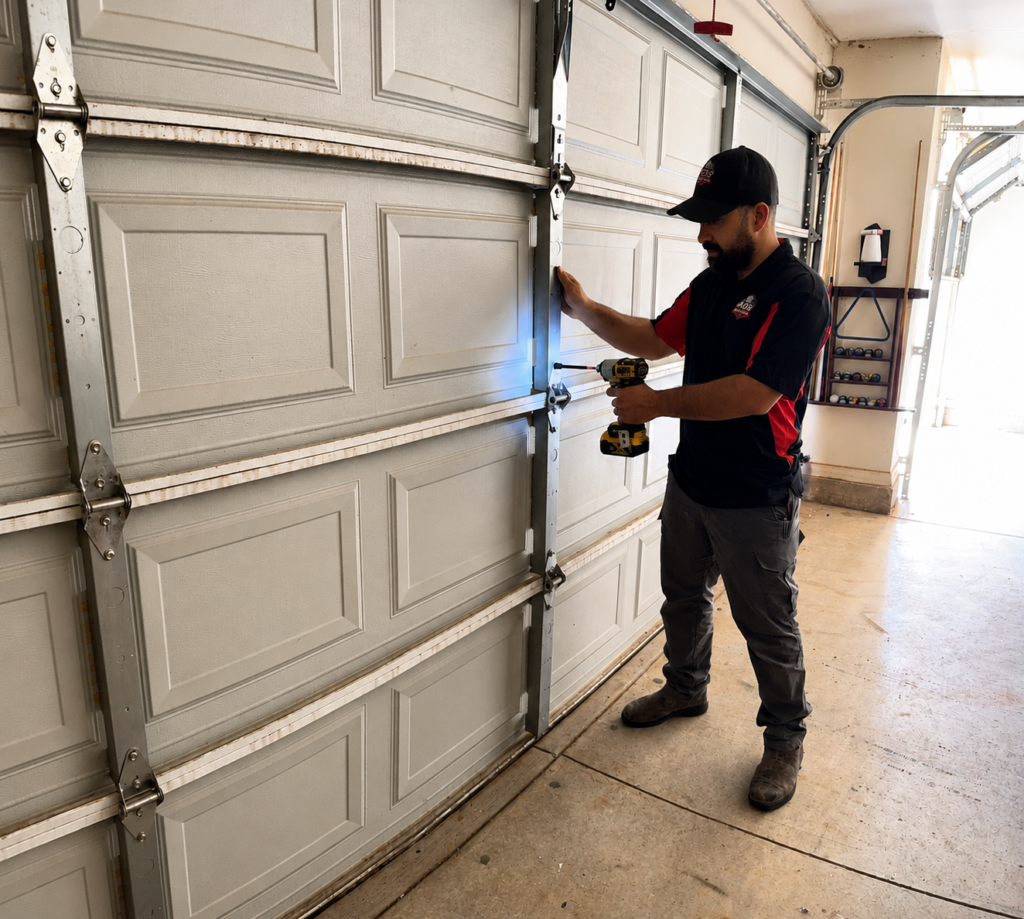
Garage door springs take a beating no matter the season, but heat and cold damage them in totally different ways. This guide breaks down what’s really happening inside that spring when temperatures swing, and why so many Edmond homeowners end up calling for garage door spring replacement in Edmond, OK right after a heat wave or a hard freeze.
The Weather Battle Your Garage Door Can’t Win
Your garage door spring doesn’t care about the weather forecast, but the weather sure cares about it. Metal expands when it’s hot and contracts when it’s cold, and that constant back and forth wears down the coil faster than most people realize. In a place like Edmond, where summer highs push past 90°F and winter mornings can dip into the 20s, springs get pulled in two opposite directions every single year.
This constant stress is exactly why so many local homeowners end up needing garage door repair in Edmond, Oklahoma, long before they expected to. Some blame the heat, some blame the cold, but the honest answer is a bit more complicated than picking one villain. Let’s break down what each season actually does to your spring.
How Summer Heat Wears Down Garage Door Springs
Heat makes metal expand, and when a torsion spring expands, its coils loosen slightly. That sounds harmless, but it actually changes how much tension the spring can hold. Over time, this repeated loosening and tightening wears down the metal’s memory, meaning the spring slowly loses its snap.
Edmond summers don’t just bring heat; they bring humidity too. That combination speeds up rust formation, especially on springs that sit close to the garage ceiling where hot air collects. Rust eats into the metal’s surface, creating tiny weak spots that eventually turn into cracks. A rusted spring under summer heat is basically a spring counting down to failure.
Lubricant also breaks down faster in high heat. Most springs are coated with a light oil or grease that reduces friction between coils. Once that layer dries out or thins from the heat, metal rubs against metal every time the door opens. That friction alone can shave months off a spring’s working life.
How Winter Cold Affects Garage Door Springs
Cold weather does the opposite of heat; it makes metal contract and stiffen. A spring that’s stiff doesn’t flex the way it should, so it has to work harder to lift the same door. Think of it like stretching a rubber band that’s been in the freezer; it just doesn’t move as smoothly.
Oklahoma winters bring sharp temperature drops overnight, and that’s where the real damage happens. A spring that goes from 45°F during the day to 20°F at night is being stressed by sudden contraction, not a slow seasonal change. This rapid shift is a major reason springs snap more often in January than in any other month.
Cold also makes metal more brittle. A spring that might bend slightly under summer stress could simply crack under winter stress instead. That’s why so many emergency repair calls in Edmond spike right after the first hard freeze of the season.
So Which Season Actually Wins?
Honestly, it’s not really a fair fight; both seasons chip away at your spring in their own way. Summer heat causes gradual wear through rust, loosened coils, and dried-out lubricant. Winter cold causes sudden, brittle failure through stiffness and rapid temperature swings.
If we had to pick one, winter tends to cause the more dramatic, sudden breaks, while summer causes the slower, sneakier damage that sets the stage for that break. A spring already weakened by a hot Edmond summer is far more likely to snap during the first cold snap of winter. In that sense, the two seasons work together against your spring rather than against each other.
Signs Your Springs Are Struggling
Catching spring damage early saves you from a door that won’t open at all. Watch for these warning signs before they turn into a full breakdown:
- A garage door that opens or closes slower than usual
- Loud popping, squeaking, or grinding noises during operation
- The door looking crooked or uneven when it lifts
- Visible gaps or stretching between the spring coils
- Rust spots forming anywhere along the spring
Noticing even one of these signs means it’s time to get the spring checked before it fails completely.
Protecting Your Springs Year-Round
A little seasonal care goes a long way toward extending spring life. Applying fresh lubricant twice a year keeps friction low no matter what the thermometer says. Checking for rust after a humid Edmond summer catches problems before they spread. Wiping down springs before the first winter freeze removes moisture that could turn into ice damage overnight.
Good insulation on the garage door itself also helps regulate the temperature swings the spring has to deal with. A well-insulated door keeps the space more stable, which means less expansion and contraction stress on the metal. Small steps like these add years to a spring’s lifespan and save homeowners from surprise breakdowns.
Garage Door Spring FAQs: Heat, Cold, and Everything Between
Q1. Do garage door springs really break more in winter?
A1. Yes, sudden cold snaps make springs brittle and prone to snapping, especially after a hot summer already weakened them.
Q2. How long do garage door springs usually last in Oklahoma’s climate?
A2. Most springs last around 7 to 10 years, though extreme temperature swings can shorten that lifespan noticeably.
Q3. Can I lubricate my garage door spring myself?
A3. Yes, a light silicone-based spray applied twice a year is simple and effective for most homeowners.
Q4. Is it safe to replace a garage door spring on my own?
A4. No, torsion springs hold serious tension and can cause injury, so this job is best left to trained technicians.
Q5. What’s the difference between torsion and extension springs?
A5. Torsion springs sit above the door and twist to create lift, extension springs stretch along the sides instead.
Q6. How do I know if a spring is about to fail?
A6. Unusual noises, uneven door movement, and visible gaps in the coils are the clearest early warning signs.
Q7. Does garage door insulation actually protect the springs?
A7. Yes, insulation keeps temperature swings inside the garage smaller, reducing the expansion and contraction stress on the spring.
Q8. How fast can a professional replace a broken spring?
A8. Most replacements take under two hours once a technician arrives with the correct spring size and tools.
The Real Takeaway for Your Garage Door
Temperature swings are simply part of life in Edmond, and your garage door spring feels every bit of it. Summer heat quietly wears the metal down while winter cold pushes it past its breaking point. Neither season is gentle, so the smartest move is staying ahead of the damage instead of waiting for a snapped spring to force your hand.
405 Garage Pros handles everything from routine spring checks to full garage door spring replacement in Edmond, OK, and we always explain what we find in plain, honest terms. If your door has been acting up lately, reach out to us, and we’ll get it running smoothly again before the next big temperature swing hits.